

Canadian Working Visa in the USA: Types and Eligibility
With more than 60% of all emigrants from Canada being in the United States, it’s clear that the US is a top destination for Canadians seeking better opportunities abroad.
However, working in the US requires obtaining a work visa, even for Canadians. But with several US work visas available to Canadian citizens, choosing the right one can feel overwhelming. This guide aims to reduce the confusion by revealing the major types of US work (as well as eligibility requirements and the steps for getting a US work visa as a Canadian).
Can Canadians Work in the United States? The Short Answer
Canadians can work in the US, but only with a valid work authorization. While Canadians can enter the US without a visa, visa-free entry does not equate to work authorization.
To work in the US, a Canadian must first obtain a US work visa for Canadian citizens. The steps for this depend on the visa type (as we’ll see below). However, the process typically involves obtaining a job offer, filing a petition, being approved, and entering the US.
Tax Forms Note for Contractors — W-8BEN at a Glance
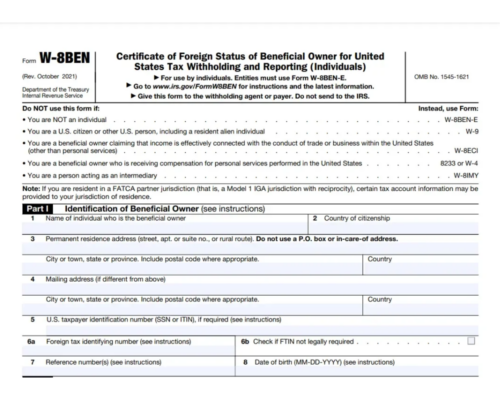
Canadians providing services to US companies as contractors or freelancers have to fill out Form W-8BEN.
- The W-8BEN is not a US work visa for Canadian citizens.
- It’s a tax form that tells the US company that the worker is not a US taxpayer.
- Without it, the US company will withhold taxes at the default rate of 30%.
Overview of U.S. Work Visa Options for Canadians
The right visa for any Canadian depends on several factors, including the individual’s profession, degree, and desired length of stay. However, work visas commonly used by individuals seeking jobs in the United States for Canadian citizens include:
| Visa type | Who it’s for |
| TN | Canadian and Mexican NAFTA/USMCA professionals |
| H-1B | Individuals in specialty occupations |
| L-1 | Intracompany transfers |
| O-1 | Individuals with extraordinary abilities |
| E1/E2 | Treaty traders or investors |
TN Status Under USMCA — Fast Track for Listed Professionals
The TN visa is one of the easiest US work visas to obtain for Canadians, making it the go-to visa for many Canadians.
It’s a non-immigrant visa that allows Mexicans and Canadians in certain occupational professions to enter the US for work on a temporary basis. It’s valid for 3 years, but is renewable indefinitely.
USMCA Context in Plain English
The TN visa was established by the North American Free Trade Agreement (NAFTA). Although the United States-Mexico-Canada Agreement has replaced NAFTA, the TN visa remains in effect.
TN Eligibility Checklist
- Canadian citizenship
- An offer from a US employer for a job in the approved NAFTA/USMCA job list (self-employment is not allowed).
- Educational or professional qualifications meet the requirements for the profession.
- Job duties align with the TN category.
- A TN support letter from the US employer.
- Evidence of paying the application fee.
- Intention to stay in the US only temporarily.
TN Application Steps for Canadians
Canadians can apply for the TN visa in two ways:
- At a Port of Entry. Simply gather all necessary documentation (passport, certificates, recommendations, TN letter, etc.) and present it to an immigration officer at a port of entry when entering the US. Adjudication is on the spot.
- Via USCIS. Complete the Form I-129 and submit it to the USCIS. Processing takes 2-6 months, but there is a premium processing option that allows applicants to receive a decision in 14 working days. If approved, applicants will receive the I-797. Then, they can proceed to enter the US.
Whether applying at a Port of Entry or via USCIS, TN Visa Expert supports applicants every step of the way. Contact TN Visa Expert for help with drafting a TN support letter, compiling the application, and even preparing for the border interview.
H-1B Specialty Occupation — Employer-Sponsored Path
The H-1B visa allows US employers to hire foreign workers in specialty occupations. Applicants must have a minimum of a bachelor’s degree.
The visa is awarded for 3 years and can be extended for an additional 3 years, for a total of 6 years.
The biggest advantage of the H-1B visa is that it allows for dual intent, meaning it provides a path to a green card. However, it is subject to annual caps, so applications later in the year may not be selected. There’s a short registration window in March, when the US employer must submit information about the company and the applicant. Selected applicants can then file their H-1B applications. If approved, the applicant can start work in the US on October 1st.
H-1B Eligibility Summary
- Foreigners in a specialty occupation.
- Have a bachelor’s degree or higher.
- Have a job offer from a US employer.
- Employers must file a Labor Condition Application (LCA) with the US Department of Labor.
H-1B Application Steps for Canadians
- Secure a job offer
- Employer submits an LCA to the Department of Labor.
- Employer files the I-129 with USCIS.
- Application may go through a lottery if the annual cap is exceeded, and if selected, it is reviewed.
- If approved, the USCIS sends Form I-797 (notice of approval).
- An applicant can enter the US and present the approval notice at a Port of Entry.
L-1 Intra-Company Transfer — Managers, Executives, and Specialists
L-1 allows companies to transfer specific employees from a foreign office to their US office. The L-1A is for the transfer of executives and managers, while the L-1B is for the transfer of an employee with specialized knowledge.
The L-1 visa is valid for 3 years. The L-1A is renewable twice (for two years each time), making a total of 7 years. And the L-1B is renewable once (for two years), making a total of 5 years.
A foreign company can also use the L-1 visa to send an employee to the US to start a new office. In this case, the period of stay is one year. Spouses of L-1 visa holders can accompany them to the US on the L-2 visa and are authorized to work.
L-1 Eligibility Summary
- The individual works in a company in Canada that has a qualifying relationship with a U.S. office (a parent, subsidiary, affiliate, or branch).
- The individual must have been with the company for one continuous year within the past three years.
- The individual must be an executive, manager, or employee with specialized knowledge.
- The individual is sponsored by the US office of the company.
L-1 Application Steps for Canadians
There are two routes to applying for the L-1 visa: regular petition and blanket petition.
Regular petition route:
- The sponsoring US company files an application with the USCIS.
- The USCIS reviews the application and, if approved, issues the I-797 (notice of approval).
- The individual presents the approved notice and supporting documents to immigration officers at a port of entry when entering the US.
Blanket petition route:
- The US company files a blanket petition with the USCIS to preapprove a corporate relationship with the Canadian company.
- The Canadian being transferred to the US completes Form I-129S.
- The employee presents the completed Form I-129S, the approved blanket, a support letter from the employer, and supporting documents to immigration officers when entering the US at a Port of Entry.
O-1 Extraordinary Ability — For Top Performers
The O-1 visa is available to Canadians with extraordinary ability in the sciences, business, arts, education, or athletics, and those who have a record of extraordinary achievement in motion picture or television.
The O-1 visa is awarded for an initial period of three years. But it can be extended for up to a year.
O-1 Eligibility Snapshot
Evidence of extraordinary achievement for the O-1 visa includes:
- National or international awards
- Publishing scholarly articles
- Membership in associations requires outstanding achievement
- Significant press coverage
- High remuneration
O-1 Application Steps for Canadians
- A US employer or US agent files Form I-129 for the individual, including:
- Evidence of extraordinary ability or achievement.
- A written advisory opinion from a peer group or a person with expertise in the beneficiary’s area of ability.
- The contract between themselves (the petitioner) and the individual.
- The individual’s itinerary during their stay in the US.
- The USCIS reviews the application, and if approved, issues a notice of approval.
- The individual can then bring this to a Port of Entry when entering the US.
E-1 Treaty Trader and E-2 Treaty Investor — Trade or Investment Routes
The E-1/E-2 allows specific people from treaty countries to enter the US. The E-1 is for treaty traders who engage in substantial trade with the US, while the E-2 visa is for treaty investors who invest a substantial amount in a bona fide enterprise in the US.
The visa is awarded for two years but can be extended for an additional two years, and there is no limit to the number of extensions that can be granted. However, these are non-immigrant visas, so beneficiaries must maintain an intention to leave the US when their visa expires.
E-1 Eligibility Highlights
- Citizenship in a country that has a treaty of commerce or navigation with the US (Canada qualifies).
- The individual must be engaged in substantial trade of goods, services, or technology between Canada and the US.
- The trade must not be one-off but continuous.
- Over 50% of the volume of the trader’s international trade must be between the US and Canada.
E-2 Eligibility Highlights
- Citizenship in a treaty country.
- The individual must have invested or be in the process of investing a substantial amount in a US enterprise.
- The investor must have 50% ownership of the enterprise or possess operational control.
- The enterprise must be active and generating income.
E-1/ E-2 Application Steps for Canadians
- Qualifying applicants must fill out the DS-160 (Online Non-immigrant Visa Application form) along with supporting documents proving eligibility. Applicants also need to file the DS-156E to provide details about their business or trade activity.
- Pay the visa application fee.
- Schedule and attend a visa interview at the US Consulate in Canada.
- If approved, proceed to enter the US.
Notes for Employers Hiring Canadians
Employers often play a big part in helping Canadians secure a work visa, enabling them to move to the US for work. Some ways employers can help are:
- Classify roles correctly: Only specific roles qualify for certain Canada to US work visa types. For example, “Financial Accountant” qualifies for the TN visa, while Bookkeeper does not. Thus, employers should make it easier for applicants to qualify for the visa by ensuring job titles align with visa standards.
- Craft job duties that match the official category description. Many visa categories require the specific tasks the employee will perform in the US to align with the generally accepted duties of professionals in that field. For example, individuals applying for the Computer System Analyst TN visa are often denied if their job description includes programming.
- Pick the right visa. The different US work visas have specific eligibility criteria, so when sponsoring an employee, the employer must choose the visa category that matches the employee’s qualifications and role.
- File the petition promptly. Where the employer is required to file on behalf of the individual, they should do so promptly to avoid delays or denial. For example, H-1B applications may not be selected if the annual cap has been reached.
- Provide the required documentation. Some visa categories require the employer to provide specific documentation when filing an I-129, such as an LCA for the H-1B or an advisory opinion for the O-1 visa. Where applicable, the employer should provide this.
- Plan timelines. Employers should understand that visa application processing can take some time and be willing to hold the individual’s employment until they secure their visa.
When to Get Expert Help
Applying for a US work visa can be complex. Very often, applicants make mistakes like using the wrong visa category, not having job duties that align with visa requirements, drafting weak support letters, submitting incomplete documentation, or missing critical deadlines. Expert guidance can help reduce common mistakes and increase applicants’ chances of obtaining a US work visa.
Applicants should consider expert guidance when:
- They’re unfamiliar with visa categories and eligibility.
- There’s misalignment between the job title/duties and standard professional titles/descriptions.
- They have trouble crafting a strong support letter,
- Filing windows are short,
- Extensive documentation is required.
- They’ve been denied before.
TN Visa Experts provide end-to-end support for Canadians applying for TN visas, from eligibility review and document preparation to border interview preparation. Contact TN Visa Experts for a higher chance of getting TN visa approvals.
Choose the Right Category and Proceed Confidently
There are numerous jobs in the United States for Canadian citizens. But Canadians need a work visa to move to the US for work. Applicants must identify the correct visa category, secure qualifying U.S. employment, and submit their application in accordance with U.S. immigration guidelines.
Obtain TN Visa Expert resources for needed help in submitting strong TN Visa applications with a high rate of success.

Author Jacob Sapochnick serves as the Managing Partner/CEO of a prominent law firm that focuses on immigration law. Boasting an extensive legal background spanning over a decade, he adeptly merges his enthusiasm for law with cutting-edge technology to aid clients worldwide in their journey to immigrate to the United States.